



Instead of multiplying by our fixed rate, we’ll link the end-of-period balance in Year 5 to our salvage value assumption. However, the management teams of public companies tend to be short-term oriented due to the requirement to report quarterly earnings (10-Q) and uphold their company’s share price. Since public companies are incentivized to increase shareholder value (and thus, their share price), it is often in their best interests to recognize depreciation more gradually using the straight-line method. In addition, capital expenditures (Capex) consist of not only the new purchase of equipment but also the maintenance of the equipment. However, one counterargument is that it often takes time for companies to utilize the full capacity of an asset until some time has passed.
What is Double-declining Balance Depreciation?
This can be particularly useful for assets that lose their value quickly—think of tech gadgets that might be outdated in just a few years. Each year, when you record depreciation expenses, it lowers your business’s reported income, potentially reducing your taxes. Make sure to check with a tax professional to get this right and make the most of possible tax benefits. The DDB function is the dedicated function to calculate depreciation of an asset using the Double Declining Depreciation method in Excel. The function takes cost, salvage value, life span and period of depreciation as arguments. Multiply the straight line depreciation rate by 2 to get the double declining depreciation rate.
Double Entry Accounting is A Must Know Here is the Meaning
Depreciation rates used in the declining balance method could be 150%, 200% (double), or 250% of the straight-line rate. When the depreciation rate for the declining balance method is set as a multiple, doubling the straight-line rate, the declining balance method is effectively the double-declining balance method. Over the online bookkeeping depreciation process, the double depreciation rate remains constant and is applied to the reducing book value each depreciation period.
How to calculate DDB depreciation
Using the DDB method allows the company to write off a larger portion of double declining balance method the car’s cost in the first few years. This higher initial depreciation aligns with the rapid decrease in the car’s value and the heavy use in the early years. Imagine a snowball rolling downhill, shrinking as it goes – that’s the double-declining balance approach. Units of production offer a pay-as-you-go vibe, matching depreciation to usage. Lastly, the sum of the years’ digits method takes a bit from both worlds, more upfront like declining balance, but with a straight-line twist.
Applying the Double Declining Balance Method in Real-World Scenarios

The SLN function in Excel is a powerful financial tool that calculates straight-line depreciation for assets over their useful life…. The DDB function is a Finance function that calculates the depreciation of an asset on the double-declining balance or another basis for a specified period. In this guide, we’re going to show you how to use the DDB function and go over some tips and error handling methods. This is the fixture’s cost of $100,000 minus its accumulated depreciation of $36,000 ($20,000 + $16,000). The book value of $64,000 multiplied by 20% is $12,800 of depreciation expense for Year 3.

At the last moment, to make the workbook Excel user-friendly we have added a Depreciation Calculator where you can quickly calculate your depreciation of a certain product. To accomplish the process, you have to put your data for, say, Initial Cost, Useful Life, and Salvage Value in the Depreciation Calculator. Moreover, the Periodor the nth year is required to complete the calculation. Usually, to calculate the depreciation of transportation, we apply the SYD or Sum of Years’ Digits method.

When should a business use this depreciation method?
- Double declining balance depreciation is an accelerated depreciation method that charges twice the rate of straight-line deprecation on the asset’s carrying value at the start of each accounting period.
- We have helped accounting teams from around the globe with month-end closing, reconciliations, journal entry management, intercompany accounting, and financial reporting.
- Enter the name or description of the property if you would like it included in the depreciation schedule.
- Transitioning from the double declining balance approach to a different depreciation method is permissible when it leads to an increased depreciation expense while adhering to accounting principles and tax laws.
- There are a few common ways to calculate depreciation, each with its specifics to match different types of business needs.
The double declining balance method wins favor for certain assets because it mirrors their real-world wear and tear, with faster value deterioration early on. Think of tech gadgets that seem to age in dog years, or heavy machinery that puts in the hard yards upfront; their book value should drop as quickly as their market value. This method also front-loads depreciation expenses, which can be a clever move for businesses looking to manage taxable income and cash flow in the earlier years of an asset’s life.
Learn about important news
This rate is then applied to the remaining book value each year, not the original cost. Take into account the nature of your assets, fiscal goals, and compliance with legal standards when selecting a depreciation method that is in harmony with the necessities of your company. Therefore, the book value of $51,200 multiplied by 20% will result in $10,240 of depreciation expense for Year double declining balance depreciation method 4.

They provide the highest value shortly after acquisition and then experience rapid deterioration due to constant use. The approach of this depreciation method is structured so as to allocate larger depreciation expenses early in the asset’s lifespan, mirroring its real-world wear. By following these steps, you can accurately calculate the depreciation expense for each year of the asset’s useful life under the double declining balance method. This method helps businesses recognize higher expenses in the early years, which can be particularly useful for assets that rapidly lose value. To use the double declining balance in Excel, enter the DDB function with the appropriate arguments. Input the asset’s initial cost, salvage value, its estimated useful life, and the period for which you want to calculate depreciation.
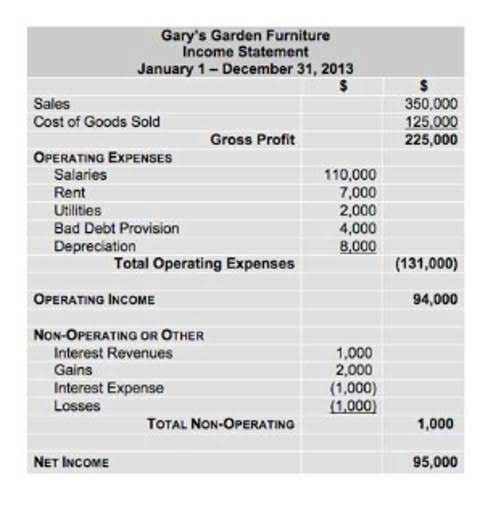
It will appear as a depreciation expense on your yearly income statement. You get more money back in tax write-offs early on, which can help offset the cost of buying an asset. If you’ve taken out a loan or a line of credit, that could mean paying off a larger chunk of the debt earlier—reducing the amount you pay interest on for each period.
